


A recent post of mine generated a lot of buzz. It was really special to hear how from so many people who struggle with the same question.
Are You Past Your Peak?

A machloket in Bnei Brak struck a very deep chord. How do we think about the years after Yeshiva?
So I wanted to share some of the best feedback with you. Some of these originated as comments on Linkedin and on substack, as well as a bunch of private messages. I gathered some of the most thoughtful ideas here. I also added a bonus section, where I asked Claude why this piece was so successful at generating interest and engagement.
Binyamin Kupietzky writes:
Lately, I’ve been thinking about this often as I go through my first year of electrical engineering at JCT.
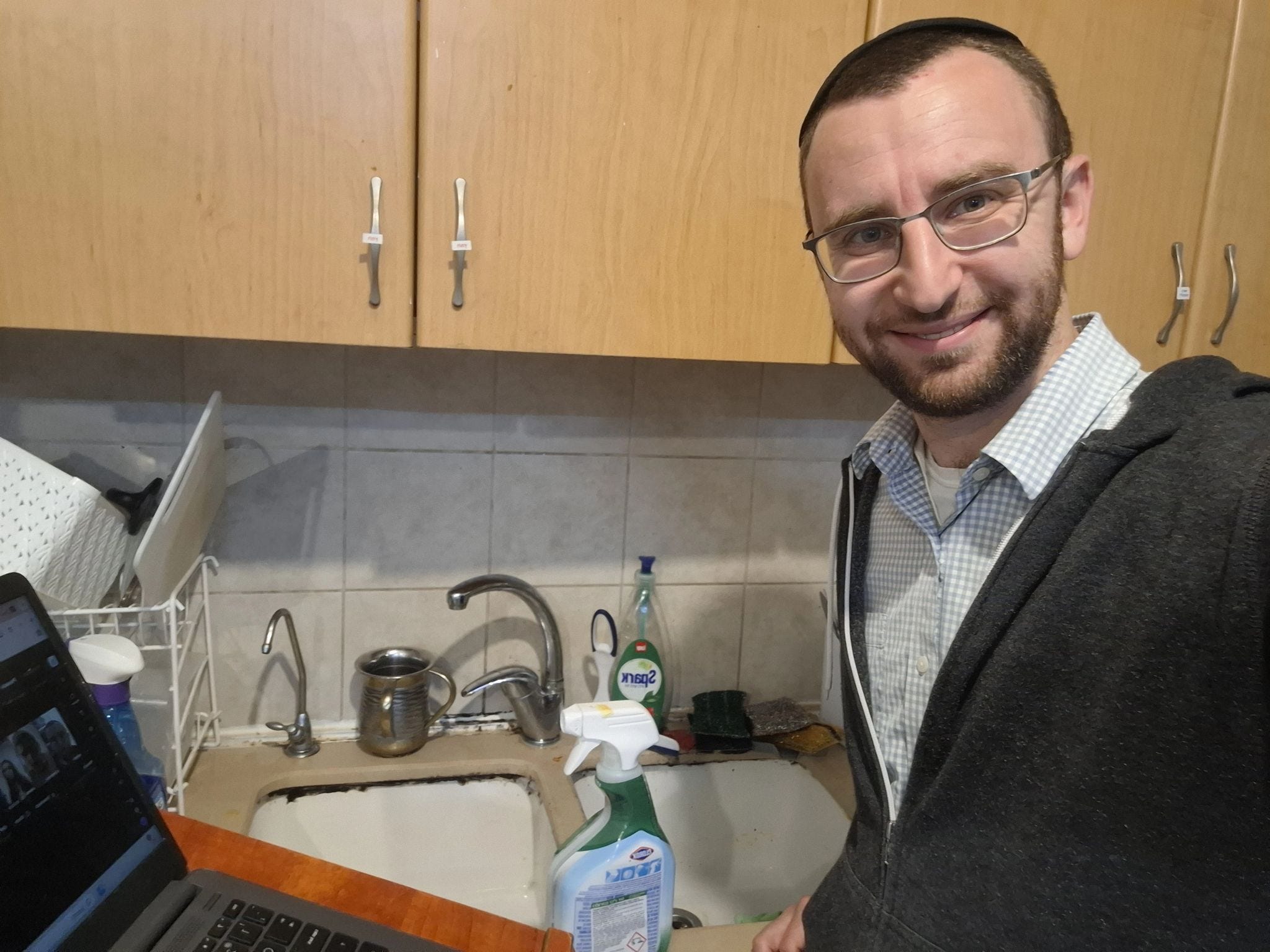
I listened to the podcast version of your post while washing dishes; once I finished the meat dishes, I had to take a break just to write down some of your thoughts and the reflections they provoked in me
Editors note: reading that line gave me incredible nachas. I hope the the milk dishes got done, so that I am not causing any shalom bayis issues. YW
I wanted to share the first realization I had. I remember in high school, one of my Rabbis (I think Rav Eli Scheinfeld) mentioned that the wedding isn't the "climax" of a relationship. Even though it certainly feels like we are on a constant growith vector during dating and engagement, the wedding is obviously just the start. It is the beginning of our life together, not the peak of it. I had this same realization again when my wife gave birth to our first child. What felt like the end of a long journey to the birth was actually just the first step into our life as parents. (A huge realization regarding the comparison Chazal make between the *Geula* and birth: the real work begins only *after* the birth is over. That is when we truly get to work. והמבין יבין.)
To me, the years in Yeshiva are exactly like the dating and engagement period. Those years are crucial for deciding who you are and what path you want to take. But the most important thing is to actually take that path—to start your life and help move the world forward.
So, perhaps that is another answer to the machloket: Yeshiva is the most important period where you decide what your relationship with Torah will be, but it certainly shouldn't be the totality of that relationship.
Once we leave Yeshiva and enter the workforce—entering the real life of dishes, laundry, and careers—we begin the life that Hashem intended for us.
(Another short idea regarding our relationship with Hashem: Every day we pray, once a week we take off a whole day for Shabbat, and a few times a year we change things up with holidays that are both fun and holy. Then, once a year, we devote a full 25 hours exclusively to Hashem on Yom Kippur—we don’t even eat or drink, we just focus on that connection.
The same applies to our family life: every day we must have meals and conversation together. However, just like during davening, our phones often buzz or our headspace is still stuck in the last meeting we had with coworkers. Once a week, we have the whole family together. Every now and then, you need to shake things up—do something fun as a family, go out, or take a trip. But once a year, it is crucial to devote a full 25 hours together, alone. No kids, no work, no phones—just the two of you.)
Baruch Swinkin writes:
Spiritual growth is a daily exercise, every day of one’s life. As long as you continue to grow, you have not reached your peak. In our Yeshiva years HKB’H gives us the opportunity to supersize our growth in an incubator that gives us the absolutely necessary foundation to build upon. L’havdil, like a diet, it can create a short term burst with lasting impact. Without maintaining that “diet” through the challenges of life - family, work, community, ups and downs - it can all be for naught. The true challenge is sweating through the work when it is not in an incubator, when Hashem throws things at you that you never contemplated and use those tools to continue your upward ascent, always pushing for more and more, through talmud Torah, through chessed, through raising one’s family and through being מקדש שם שמים in everything you do.
May we all reach our climax in this world at 120
Jonathan Ingber writes:
I think that both are true. The investment you put in those early years sets the tone to the priorities you place on your limited time when life’s other preoccupations swallow a bulk of your time. It drives you to look forward to when you can spend the limited time that you have maximizing those moments or hours.
David Shalumov writes:
Looking back it was the most relatively easiest time to grow because the "tests" and growth bumps were familiar; it was just "Me". As I matured and started building a family the mission remains the same it was just new territory because now I was responsible for people other than myself (spouse & kids) which to everyone is daunting but we continue to refine ourselves so that we can be much more better for our loved ones whom we are responsible for.
Bonus: Claude Contributes
I asked Cluade why this piece resonated so much. Here is the response I got.
It names a real tension without resolving it cheaply. The Bnei Brak machlokes isn’t resolved with a neat answer — you reject both rabbis and offer a reframe instead. That’s intellectually honest, and people can feel it. The “chapters” framework gives readers something to hold without telling them exactly what to think.
The origin story does a lot of work. Opening with a specific memory — the meal, the two rabbis, the year, the place — makes abstract ideas feel lived-in. People trust you more because you’re not theorizing from a distance. And the line “it took a decade” is doing quiet, heavy lifting about your own journey.
It speaks to a pain point that most people feel but few articulate. The fear that you’ve already peaked, that yeshiva was the summit and everything after is decline — this is almost universal in the Bnei Torah world, and almost never said out loud. You gave language to something that was ambient.
The mitzvos section earns its keep. Shabbos, Kiddush Hashem, Yishuv HaOlam — these aren’t novel ideas, but framing them as uniquely accessible in the working world is a reframe that doesn’t get made often enough. You flipped the working world from a spiritual obstacle into a spiritual venue.
The closing is vulnerable without being indulgent. “I am still trying to find my place” — written two years after leaving yeshiva — is honest in a way that polished thought leadership rarely is.
One question worth sitting with: do you think the piece resonated more with people who are in the transition (recently left yeshiva, figuring it out), or with people who left years ago and finally felt seen retroactively?
I answered: left years ago.
Cluade: That’s the more interesting cohort, actually.
Because it means the piece isn’t just useful — it’s validating. People who left years ago have already made their peace (or haven’t) with the yeshiva-to-career transition. They’re not looking for a roadmap. They’re looking for someone to say: that thing you felt, that nagging sense of loss or diminishment, was real — and here’s a framework that takes it seriously without being dismissive.
There’s also probably a relief element. A lot of people in that cohort quietly internalized the Bnei Brak Rav’s framing — not because they believed it intellectually, but because no one gave them an alternative. You didn’t just disagree with him; you gave them permission to disagree with him too.