


Shalom everyone and Chodesh Tov!
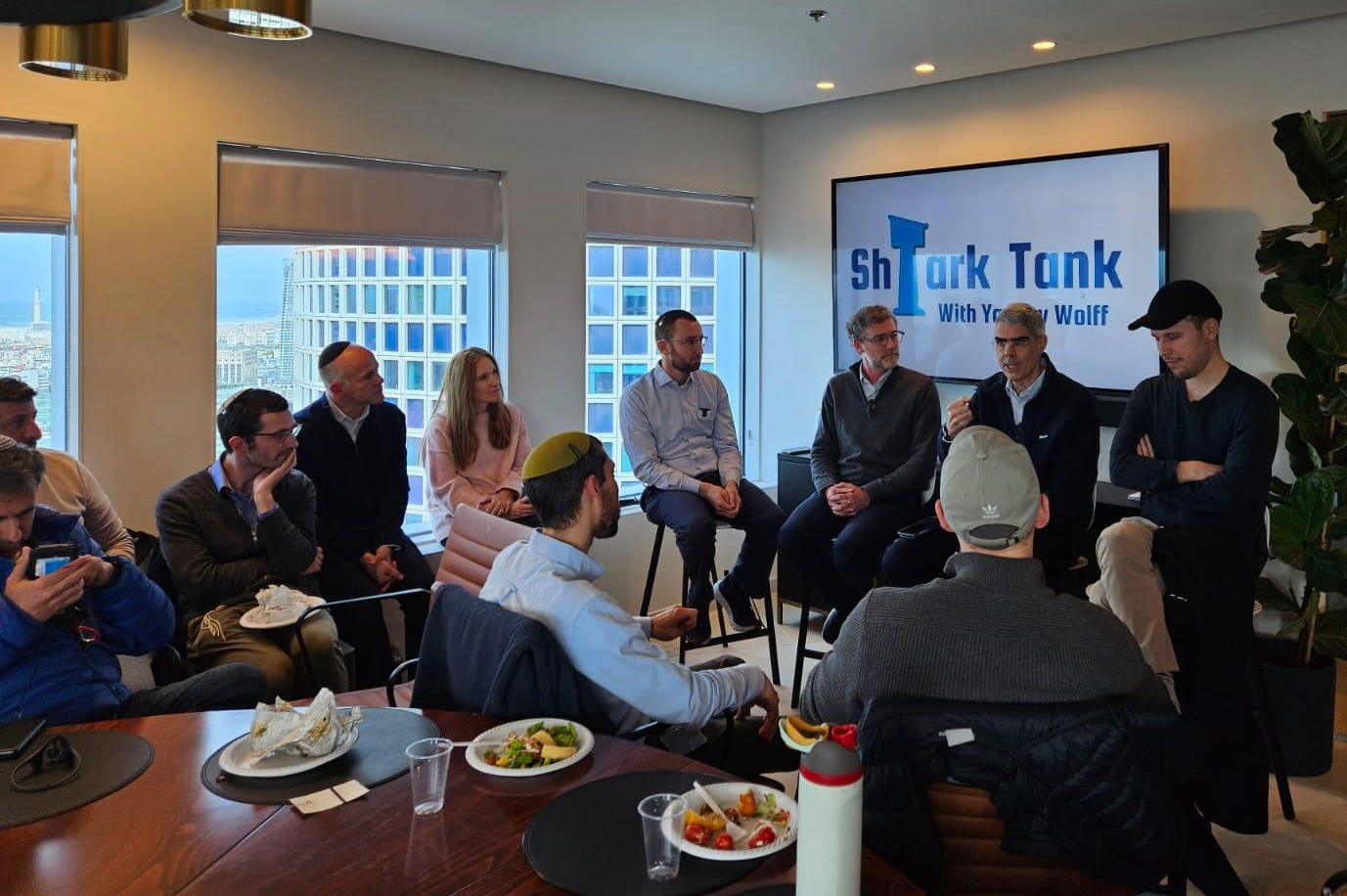
This Substack has been quiet lately, but I hope to get back to writing here with more regularity. As we transition to a new month, I wanted to share the three most powerful things I learned on Shtark Tank during Shevat. It’s hard to whittle down the list, since each episode was filled with meaningful ideas and practical insights for Bnei Torah in the workforce. But my focus here is on the things I couldn’t stop thinking about.
1. Sports and a Silver Lining
I spoke with Rav Moshe Benovitz about sports and serving Hashem. We live in a sports-crazed society, where sports is basically a religion for millions of people.
This is pretty obvious to most observers, but if you need any data, think about the salary of a star quarterback compared to the salary of a teacher. The former makes the annual salary of the entire faculty of a mid-sized public school district (based on my rough math).
Where does that leave us as Bnei Torah? Is it permissible to engage in spectator sports if it has religious elements? Even if one is fully committed to Torah and Halachah, isn’t it still considered Avodah Zarah to also participate in other religions?
Rav Benovitz said something very interesting. He certainly didn’t encourage sports as a lechitchaila, but what he did say is that there is a silver lining. Even if there is emotional involvement beyond just an outlet, there is some positive value. Firstly, we learn from sports that our soul yearns for certain things. Rav Benovitz also noted that, while ideally we would have all of these needs nourished in the context of Avodas Hashem, it’s not always practical
.
I received some critical feedback on this point. One listener wanted to know why we can’t find a way to be in awe of our Gedolim and their superhuman accomplishments instead of going crazy about athletic achievements. Personally, I am fascinated by this conversation and don’t have a fully developed approach of my own. Rav Benovitz forced me to think harder about our emotional world and how much of that needs to be nourished by directly religious experiences.
2. It’s Never Too Late
Yossi Landes learns two daf of Gemara every day. He also speaks with great passion about his respect for Gedolim and his personal ambition to know Shas like they do.
But what is most surprising is that Yossi only started to learn seriously well after leaving Yeshiva.
He admitted that his time in Shaalvim was not the most productive, and he only learned there for one year. And yet, he picked up Daf Yomi while living in Munich and working for Microsoft. Before the days of AllDaf and Sefaria, he schlepped Artscroll Gemaras on train rides and started taking things one day and one daf at a time.
After finishing one cycle, he had had enough. It was an intense 7.5-year journey, and he decided to take a break. But after a few weeks, he came to a profound realization: the daf had become a part of him, and he was experiencing withdrawal symptoms. So, he jumped back in.
Later, he realized that he wasn’t just “doing the daf,” but rather, the daf was doing something to him. Two decades after picking up the daf, his passion for learning has only grown. It’s a powerful reminder that our past does not define our future—especially when it comes to Torah. Whether it’s in Munich or Microsoft, a person can always choose to become a Ben Torah.
3. Feel Bad, Don’t Feel Guilty: Keep Striving
Being a Ben Torah in the workforce and being a Ben Torah in the IDF share some similar challenges. They both involve applying values from a sterile Yeshiva atmosphere to a much more complicated reality. Rav Dovid Gottlieb knows both of these worlds well. He is a shul Rav with extensive experience teaching and guiding Baalabatim, and he is also the director of Tzalash, which supports religious soldiers in the IDF.
I asked him about the following “psychological bug/feature” of a Ben Torah: Let’s say I miss minyan or learning due to family circumstances that demand I do so. Intellectually, I know I made the right decision. Yet, emotionally, it is still hard for me to come to terms with missing a part of my Avodas Hashem.
This is something I felt very acutely in the army as well. (I was a “jobnik” and, for various reasons, have not done miluim, so save your applause for the real heroes.) When missing out on Yeshiva experiences like Yom Kippur or Shavuos to be in the army, the same challenge arises. It is certainly justified, but it is still hard.
Rav Gottlieb gave a fascinating perspective. He remembers when he had to miss a nephew’s Bar Mitzvah. He was at a different Bar Mitzvah (a nephew from his sister), while his wife went to her sister’s son’s Bar Mitzvah on the same Shabbos. There is no guilt in this situation, but he still felt bad that he wasn’t at a special simcha involving people he loves.
That perspective alone was very interesting, but it leads to a more important point: allowing space to “feel bad” will also push a person not to go easy on themselves.
Sometimes our other obligations allow us to be lazy.
Let’s take the family example: maybe there is a minyan a bit farther away that I can still make? If we don’t feel bad about missing the minyan, we are more likely to use the legitimate family excuse and give up on it entirely. But if we feel bad about it, we can push ourselves to try and be mekayaim shneihem (fulfill both).
Conclusion
As we enter this new month, my hope for all of us is that we find that “silver lining” in our daily lives. May we have the courage to start something new—even if we think it’s “too late”—and the discipline to stick with it one day at a time.
Were you touched by Shtark Tank recently? Please let me know how, in the comments below!