


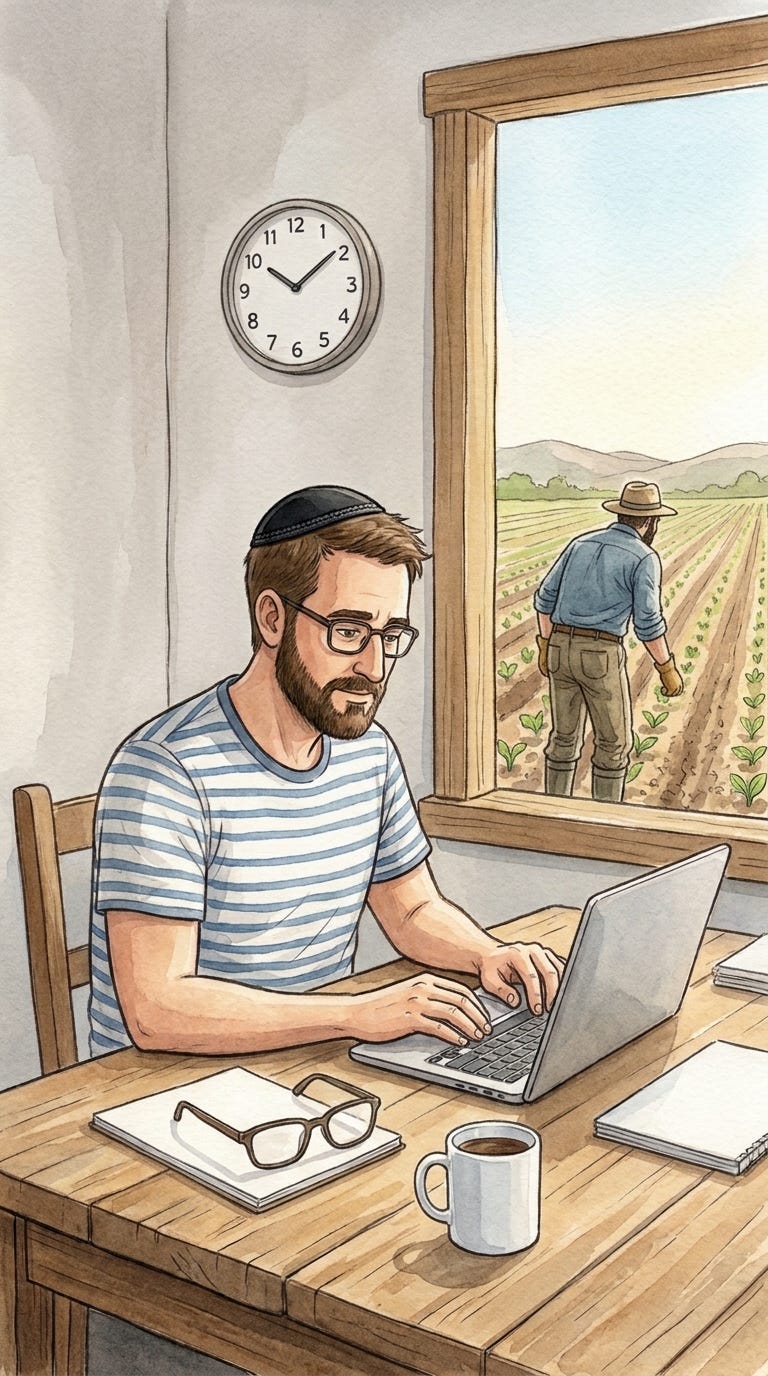
It seems like a romantic and cinematic scene. Rivka arrives on her camels. Yitzchak stands in the field, engaged in deep and intense prayer, as the golden afternoon light starts to set. But what if this scene is closer to a corporate office than to a romantic movie?
Rashi’s Pshat
The pasuk says:
וַיֵּצֵא יִצְחָק לָשׂוּחַ בַּשָּׂדֶה לִפְנוֹת עָרֶב וַיִּשָּׂא עֵינָיו וַיַּרְא וְהִנֵּה גְמַלִּים בָּאִים
The common understanding comes from Rashi, which is connected to the Gemara in Berachos. Rashi explains:
לשוח. לשון תפילה, כמו ישפוך שיחו (תהילים ק”ב)1
The Rashbam
The problem is that not all the commentators agree. The Rashbam writes that Yitzchak was out in the field to deal with his farming:
ויצא יצחק לשוח בשדה - כדכתיב: וכל שיח השדה כלומר: לטעת אילנות ולראות ענייני פועליו
He was checking on his trees, his orchards, and his plants. Why does the Rashbam disagree with Rashi? It probably has to do with the fact that the pasuk emphasizes the location. Yitzchak went to the field, if he wanted to pray, he should have gone to a shul!2
This raises two questions.
What is the significance of Rivka and Yitzchak’s first meeting happening while Yitzchak was at work?
According to Rashbam’s pshat (Yitzchak was in the field working) the drasha of the gemara (Yitzchak was davening) seems very far from peshuto shel mikra. Is there any deeper connection between these two descriptions?
Mincha Is Different
I once heard from Rav Soloveitchik (and later found this sicha by Rav Aharon Lichtenstein) that Mincha is a unique davening. Shacharis and Maariv bookend our day. They give it structure, shape, and direction, by declaring at the beginning and the end that we are loyal and committed to HaKadosh Baruch Hu.
Mincha is different. It happens during the day. It shows an integration of spirituality and awareness of HaKadosh Baruch Hu with everything else we are doing. Mincha is fundamentally about infusing our workday with kedusha.
If so, it’s not a coincidence that Mincha falls in the middle of the workday. And this goes back to the very first Mincha that Yitzchak prayed. Why was he praying in the field? Because in the middle of the day is the time when he had to care for his fields. The tefillah of Yitzchak was inherently connected to his farming and his work.
Two Layers
Now we can answer both questions. What Yitzchak was doing was davening the first office Mincha. He was davening in the middle of his workday. That’s why the pshat and the drash are not so distant from each other. The Rashbam gives us the plain scene of a man at work. The Gemara adds the layer of tefillah. But these two ideas are closely connected with each other.
We could sharpen this idea further. The pshat is that Yitzchak was working and the drash that he was davening. We see from here that a person works differently when he is inspired by his davening. He has greater bitachon, is not tempted to cut corners, and is imbued with a sense of mission and purpose. The office mincha affects the business meetings taking place before and after.
And now we understand why it was appropriate for Yitzchak and Rivka to meet at that moment. He wasn’t just going about his business. He was expressing a deep truth about avodas Hashem: it’s relevant beyond the walls of a shul, and it’s just as relevant when a person is out tending his fields.
Not New, Not Modern
The takeaway is bigger than one pasuk. Integrating spirituality and work isn’t a modern accommodation for professionals who can’t make it to the beis medrash. It’s baked into our religious identity and in to our daily schedule, going all the way back to Yitzchak (and earlier).3
This is based on the Gemara in Berachos 26b:
יִצְחָק תִּקֵּן תְּפִלַּת מִנְחָה, שֶׁנֶּאֱמַר ״וַיֵּצֵא יִצְחָק לָשׂוּחַ בַּשָּׂדֶה לִפְנוֹת עָרֶב״, וְאֵין ״שִׂיחָה״ אֶלָּא תְּפִלָּה, שֶׁנֶּאֱמַר ״תְּפִלָּה לְעָנִי כִי יַעֲטֹף וְלִפְנֵי ה׳ יִשְׁפֹּךְ שִׂיחוֹ״
See also Rashbam on the previous pasuk
See the Netziv on Bereshis 2
I fondly remember the occasional Mincha in your dad's office, when all the conference rooms were occupied.