


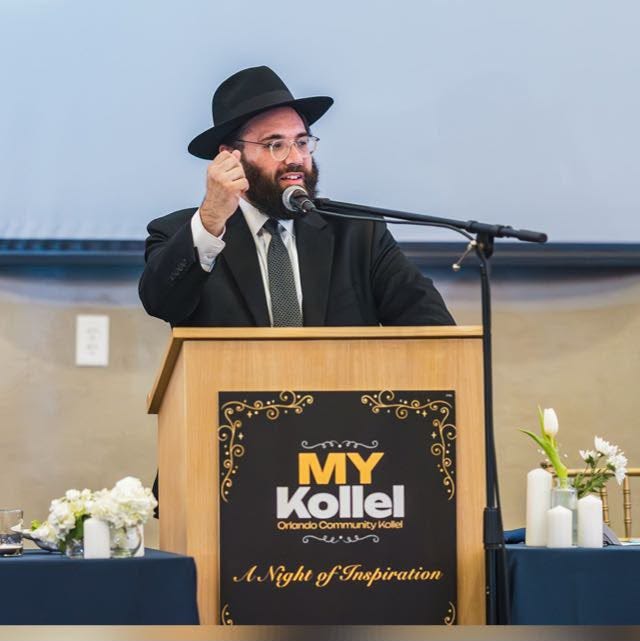
A few weeks ago I posted a podcast episode about Har HaBayit that got a lot of pushback. Some of those messages were included in this week’s mailbag episode. Due to time constraints, I couldn’t read out the entirety of every message. I wanted to use this post to share the full version of the thoughtful and thorugh message from Rav Naftali Kassorla from Orlando.
I think the discussion surrounding Har HaBayis deserved a much stronger treatment of the opposing position than it received.
My primary issue is not that there are no respectable halachic opinions permitting ascent. There clearly are. Nor is my argument that every posek who permits going is somehow outside the mainstream. The issue is whether the opposing position was presented fairly and in its strongest form.
One thing that stood out to me was the inconsistency in how rabbinic authority was treated throughout the discussion. When the topic shifted to techeiles, specific poskim were cited by name, allowing listeners to understand exactly whose opinions were being relied upon. Yet when the conversation turned to Har HaBayis, the discussion largely became, “My rebbe paskened this way,” without identifying who that posek was. If the claim is that there has been a meaningful shift in contemporary psak, then it is entirely reasonable to ask: which posek, and how does that position relate to the overwhelming body of gedolim who have continued to prohibit ascending Har HaBayis?
More importantly, I think two major arguments against ascending were never seriously engaged.
Security
The first is the meta-halakhic and security consideration. This is not some outdated concern that has faded with time. If anything, the security realities surrounding Har HaBayis have only become more volatile. The fact that organized ascents often require significant military and police protection demonstrates that this is not merely a technical halachic discussion. Whether one ultimately agrees that these considerations should influence psak is a legitimate debate—but pretending they are insignificant or no longer relevant is simply not an accurate presentation of the opposing view
.
Big Poskim Ignored?
The second is the underlying halachic dispute itself. Much of the permissive position depends upon identifying the boundaries of the Mikdash and relying upon particular understandings of the Radbaz’s testimony. But that premise is itself disputed by major poskim. Rav Moshe Sternbuch, for example, develops a substantial halachic argument challenging whether the Radbaz’s measurements and identifications can be relied upon in practice. One may disagree with his conclusion, but it is hardly a superficial argument. It deserves to be confronted directly rather than ignored.
The citation of Rav Yitzchak Breitowitz also illustrates this point. His often-circulated comments are frequently presented as though they amount to an endorsement of ascending Har HaBayis. They do not. His point was considerably narrower: that one could argue the factual uncertainty regarding the location has diminished enough that the halachic calculus may be different than it once was. That is a discussion about the metzius. It is not the same thing as issuing a practical directive that people should ascend. Those are two very different claims.
Lack of Respect
What frustrated me most, however, was the attempt to steelman the opposing position. Rather than engaging these substantive halachic and meta-halakhic arguments, the conversation quickly shifted toward attributing motives to the rabbanim who prohibit ascent—that their rulings are really driven by sociology, politics, or other external concerns rather than genuine Torah reasoning.
I find that deeply unpersuasive and, frankly, disrespectful.
If Rav Moshe Sternbuch, Rav Elyashiv, Rav Nebenzahl, and countless other leading poskim argue against ascending Har HaBayis, the first obligation is to grapple with the substance of their arguments. One may ultimately reject those arguments, but dismissing them by speculating about what the rabbanim “really” meant or what was “really” motivating them is not serious engagement with their Torah.
Reasonable people can disagree about Har HaBayis. There are genuine machloksim regarding the metzius, the halachic sources, and the practical conclusions. But if we are going to have that conversation, then both sides deserve to be represented honestly. That means addressing the strongest halachic arguments, acknowledging the real meta-halakhic considerations, and resisting the temptation to substitute psychological explanations for substantive engagement with the Torah itself.
Status Reactions
After your episode, I posted some of my thoughts on my whatsapp status.
One thing that struck me after posting my thoughts on Har HaBayis wasn’t simply the number of responses—it was the remarkable consistency in where thoughtful people seemed to converge.
As someone who teaches and mentors many students, I care less that people agree with me than that they learn how to think carefully. The ensuing discussion was thoughtful, respectful, and, at times, surprisingly nuanced. There were certainly disagreements about the practical halachah and whether changing circumstances can ever alter long-standing psak. Those are legitimate discussions, and no serious person should pretend otherwise.
But there were a few points that repeatedly surfaced.
The first was that many found it deeply unconvincing when the discussion shifted from engaging arguments to assigning motives. There is an important difference between disagreeing with a posek’s reasoning and claiming to know what was “really” motivating him. The latter is not only intellectually weak; many felt it was inherently dismissive. If a gadol writes a teshuvah, the burden is to engage with the teshuvah—not to psychoanalyze the author.
Second, many commented on the extraordinary historical consensus surrounding Har HaBayis. There are very few issues on which communities as diverse as the Rabbanut, the Badatz, and the overwhelming majority of leading poskim across the Torah world have maintained such consistent practical guidance for decades. One is certainly free to argue that circumstances have changed or that the halachic calculus should be revisited. But revisiting a consensus is very different from casually dismissing it as though it were never rooted in serious halachic analysis to begin with.
Motivations
Perhaps the most interesting discussion, however, centered on motivation.
Several students observed that some of the contemporary rhetoric surrounding Har HaBayis seems driven less by halachah and more by a desire to demonstrate sovereignty—to prove to the Arabs, or to the world, that “this is ours.” Whether or not that accurately describes everyone advocating ascent is beside the point. The broader observation was that this mindset feels fundamentally foreign to the traditional chareidi approach, which generally has never viewed symbolic assertions of national pride as sufficient justification for altering long-standing religious practice.
One student put it rather bluntly: if something truly belongs to you, you do not constantly feel compelled to prove it. There was a certain maturity in that observation. Security, sovereignty, and national identity are all real considerations in public life, but they are not automatically halachic arguments. Conflating the two can produce a discussion that becomes more about symbolism than about Torah.
Common Ground
What encouraged me most was not that everyone reached identical conclusions. They did not. Rather, it was that there was broad agreement on the standards by which these conversations ought to be conducted. Great rabbanim deserve to have their arguments taken seriously. Genuine halachic disagreements deserve to be debated honestly. And we should be very hesitant before attributing motives to people whose Torah scholarship and yiras Shamayim far exceed our own.
Those standards are worth preserving regardless of where one ultimately comes down on Har HaBayis.
Interesting comment received:
A lot of Rabbi Kassorla's points resonated and I want to caveat my point by starting with that although it is a very complex sugya, I myself don't go up, based on my fidelity to my Rabbeim and the chinuch I received of adherence to Gedolei Yisroel.
But I would like to point out a clear inconsistency in R' Kassorla's argument.
Kassorla rightly criticizes advocates of ascent for focusing on the supposed psychological, sociological, or ideological motivations of their opponents rather than engaging the halachic substance of the sugya.
Yet he then does precisely that himself, characterizing advocates of ascent as motivated by a desire to assert Jewish authority and sovereignty.
Perhaps some are.
But if the standard is that we stick to the sugya rather than psychoanalyzing the other camp, that standard must apply in both directions.
You cannot dismiss motive as irrelevant when discussing those who oppose ascent, then invoke motive when discussing those who support it.
Either motive is relevant or it is not.
Applying that standard selectively is glaringly inconsistent, and more than a little hypocritical.
My point is simply that the same rules of argument must apply to both sides.
To reiterate, I am not advocating for ascent, nor do I ascend, just seeking a consistent standard as to admissible argument.
Did R Kassorla write this or say it?
Pangram says this is 100 percent Ai and it shows.
I take halachic arguments.based on the effort and seriousness behind them. AI writing is the opposite of that.
(The same goes for Har Habayis. The assirim have generally very little to rely on except 'mesorah' and vague platitudes. The matirim expend significant effort on the arguments. It's hard to steelman the reason it's assur because it's not.)